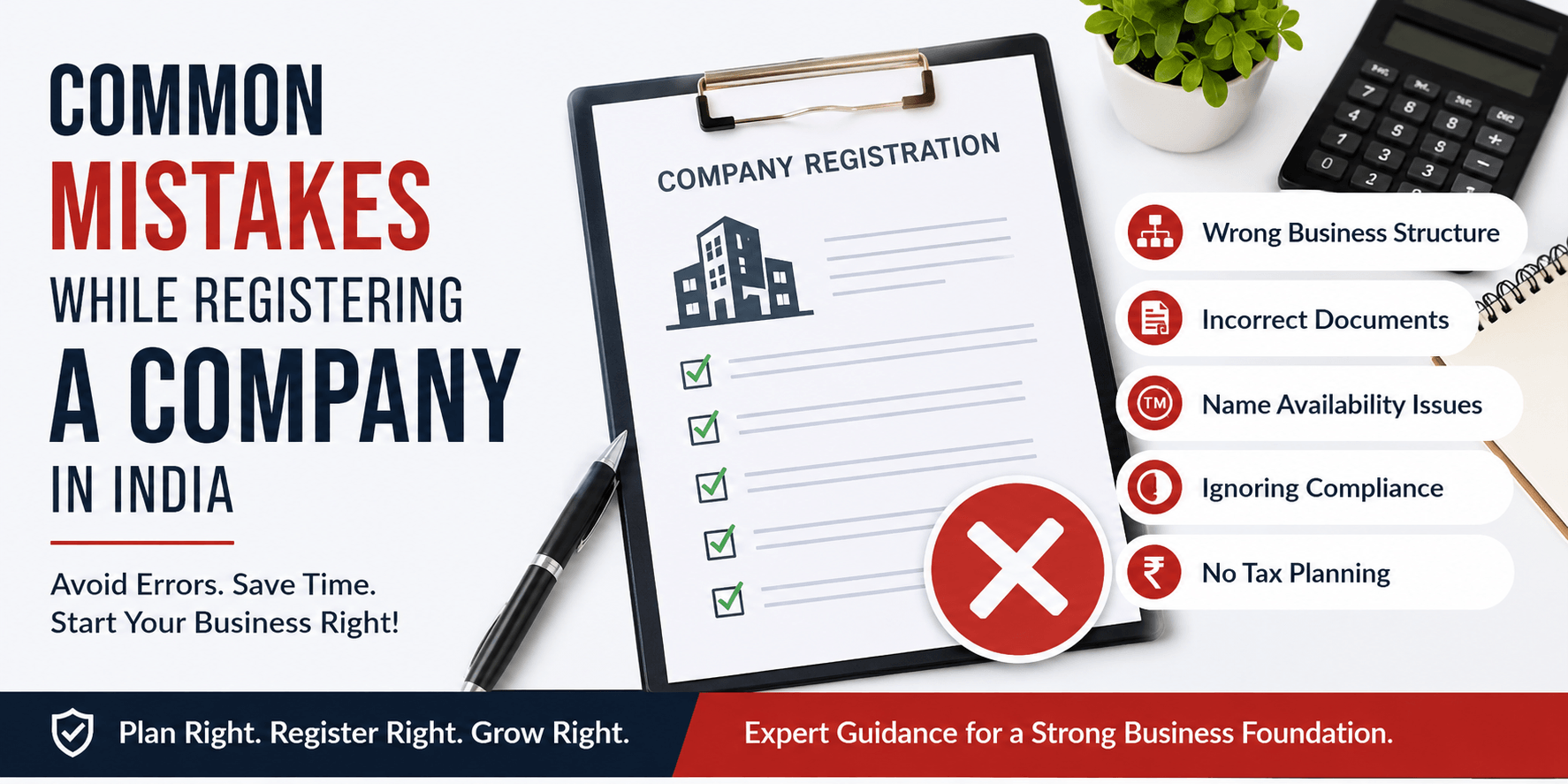
Starting a business is exciting. But while registering a company in India, many entrepreneurs and startups make small mistakes that later lead to legal issues, tax complications, penalties, or operational delays.
Whether you are planning a Private Limited Company registration, LLP registration, or starting a proprietorship business, understanding these mistakes can help you save time, money, and future compliance headaches.
In this article, we will discuss the most common mistakes while registering a company in India and how to avoid them.
Why Proper Company Registration Matters
Company registration is not just a legal formality. It affects:
- Business credibility
- Taxation structure
- Funding opportunities
- Compliance requirements
- Liability protection
- Business scalability
Choosing the right structure and completing proper documentation from the beginning helps businesses operate smoothly and legally.
1. Choosing the Wrong Business Structure
One of the biggest mistakes entrepreneurs make is selecting the wrong business entity.
Many people randomly choose between:
- Proprietorship
- LLP (Limited Liability Partnership)
- Private Limited Company
- OPC (One Person Company)
without understanding the long-term impact.
Why This Is a Problem
The wrong structure can affect:
- Tax savings
- Investor funding
- Liability protection
- Compliance costs
- Business expansion
Example
A startup planning to raise investments later should ideally consider a Private Limited Company, while a small professional practice may benefit more from an LLP structure.
Tip
Consult a professional Chartered Accountant before company registration to choose the right business model.
2. Using Incorrect or Mismatched Documents
Incorrect documentation is one of the most common reasons for registration delays.
Common Documentation Errors
- PAN card name mismatch
- Incorrect Aadhaar details
- Invalid address proof
- Expired utility bills
- Spelling mistakes in documents
- Mobile number/email mismatch
Even a small mistake can lead to rejection from the Ministry of Corporate Affairs (MCA).
Tip
Always verify:
- Name spellings
- Address consistency
- Validity of documents
before submission.
3. Ignoring Name Availability & Trademark Issues
Many businesses finalize a company name without checking:
- MCA name availability
- Trademark conflicts
- Domain availability
This often results in rejection during the registration process.
Why It Matters
Your business name should be:
- Unique
- Legally available
- Brand-friendly
- Future-ready
Tip
Before finalizing the company name:
- Check MCA portal
- Search trademark database
- Verify domain and social media handles
4. Not Understanding Compliance Requirements
Many entrepreneurs believe that company registration is a one-time process. In reality, every registered business has ongoing compliance obligations.
Common Compliance Requirements
- GST filing
- ROC filing
- Income tax returns
- Accounting & bookkeeping
- TDS compliance
- Audit requirements
Ignoring these can lead to:
- Heavy penalties
- Notices
- Director disqualification
- Business complications
Tip
Understand post-registration compliance before incorporating the business.
5. Delaying GST Registration
Some businesses start operations without checking whether GST registration is mandatory.
This becomes risky for:
- Service providers
- E-commerce sellers
- Interstate businesses
- Freelancers
- Consultants
Common Problems
- GST penalties
- Input tax credit loss
- Vendor issues
- Legal notices
Tip
Check GST applicability at the beginning itself instead of waiting for notices.
6. Using Residential Address Without Proper Permission
Many startups use a residential address as a registered office without proper documentation.
Issues That Arise
- Address proof rejection
- NOC problems
- Verification issues
Documents Usually Required
- Electricity bill/property tax receipt
- Rent agreement (if applicable)
- NOC from owner
Tip
Keep proper address proof ready before applying.
7. Ignoring Shareholding & Founder Agreements
In startups with multiple founders, lack of clarity creates future conflicts.
Common Mistakes
- No founder agreement
- Undefined ownership percentages
- No roles/responsibilities
- No exit clauses
Why It Matters
Business disputes between co-founders are very common in growing startups.
Tip
Always document:
- Shareholding structure
- Roles
- Responsibilities
- Profit-sharing
- Exit terms
8. Trying DIY Registration Without Professional Guidance
Many businesses attempt company registration using random online tutorials.
While basic registration may seem simple, mistakes later become expensive.
Risks of DIY Registration
- Wrong structure selection
- Tax issues
- Compliance gaps
- Improper documentation
- Missed deadlines
Tip
Working with an experienced Chartered Accountant helps avoid costly errors and ensures smooth registration.
9. Not Planning Taxes Early
Tax planning should begin at the registration stage itself.
Most businesses only think about taxes during March or while filing returns.
Smart Tax Planning Includes
- Choosing correct business structure
- Expense planning
- GST optimization
- Salary vs profit strategy
- TDS compliance
Tip
Early tax planning helps businesses legally reduce liabilities and improve financial efficiency.
10. Ignoring Proper Accounting & Bookkeeping Setup
Many startups focus only on registration and ignore accounting systems.
This creates issues later during:
- GST filing
- Audits
- Fundraising
- Tax filing
- Financial reporting
Tip
Set up:
- Proper bookkeeping
- Accounting software
- Invoice systems
- Expense tracking from Day 1.
Need Help With Company Registration in Pune?
Vaibhav Chavan & Co. helps startups, entrepreneurs, professionals, LLPs, and private limited companies with:
- Company registration
- LLP registration
- GST registration
- Tax planning
- Accounting & bookkeeping
- ROC compliance
- Audit & advisory services
Start your business journey with proper financial and legal guidance.