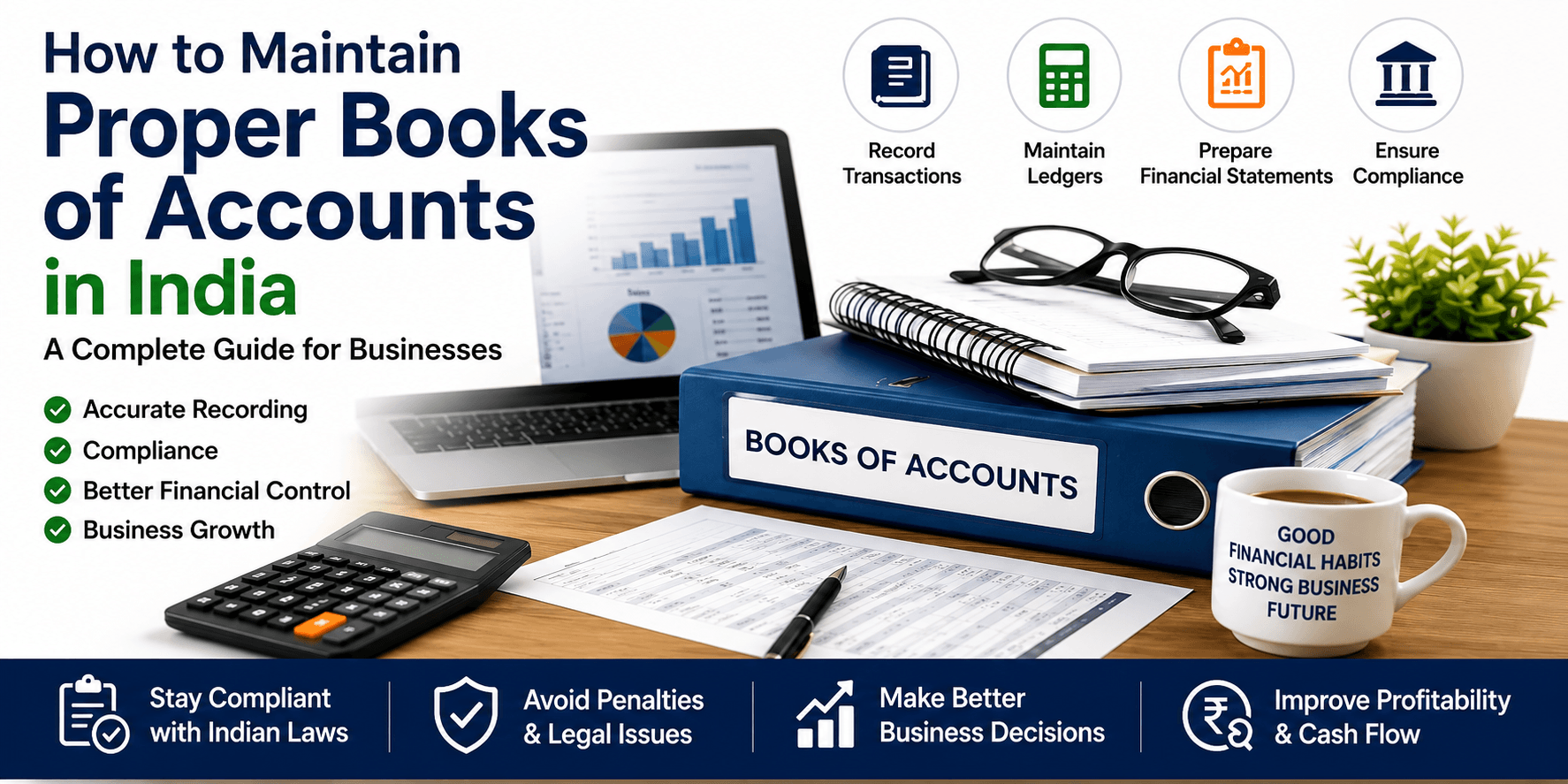
Maintaining proper books of accounts is one of the most important responsibilities for every business in India. Whether you run a startup, private limited company, LLP, proprietorship, or work as a freelancer or consultant, proper bookkeeping helps your business stay financially healthy, legally compliant, and growth-ready.
Many businesses focus only on sales and operations but ignore proper accounting practices. This often leads to:
- Tax notices
- GST issues
- Cash flow problems
- Financial confusion
- Compliance penalties
In this article, we will understand how to maintain proper books of accounts in India, why it is important, and the best accounting practices businesses should follow.
What Are Books of Accounts?
Books of accounts are records of all financial transactions of a business. These records help track:
- Income
- Expenses
- Purchases
- Sales
- Assets
- Liabilities
- GST transactions
- Tax payments
Proper accounting records help businesses maintain transparency and make better financial decisions.
Why Maintaining Proper Books of Accounts is Important
Maintaining proper books of accounts is important for:
- Income tax compliance
- GST compliance
- Audit requirements
- Financial reporting
- Business planning
- Loan approvals
- Investor confidence
Without proper bookkeeping, businesses may face:
- Incorrect tax filings
- Financial losses
- Legal complications
- Compliance penalties
For startups and SMEs, proper accounting is essential for sustainable business growth.
Who Needs to Maintain Books of Accounts in India?
Under the Income Tax Act and Companies Act, maintaining books of accounts is mandatory for:
- Private Limited Companies
- LLPs
- Partnership Firms
- Proprietorship businesses
- Professionals & freelancers above specified income limits
- Businesses registered under GST
Even small businesses should maintain accounting records for smooth operations and compliance.
Essential Books of Accounts Every Business Should Maintain
- Cash Book
A cash book records:
- Cash receipts
- Cash payments
- Daily cash transactions
This helps businesses monitor cash flow and prevent cash mismatches.
- Sales Register
A sales register records:
- Customer invoices
- Sales transactions
- GST on sales
This is important for GST return filing and revenue tracking.
- Purchase Register
A purchase register includes:
- Vendor purchases
- Expense bills
- Input GST details
It helps businesses claim Input Tax Credit (ITC) properly.
- Bank Statements & Bank Book
Bank records help businesses:
- Track transactions
- Reconcile accounts
- Monitor payments and receipts
Regular bank reconciliation improves financial accuracy.
- Expense Records
Businesses should maintain records for:
- Office expenses
- Travel expenses
- Salary payments
- Utility bills
- Professional charges
Proper expense tracking helps reduce taxable income legally.
- GST Records
GST-registered businesses must maintain:
- GST invoices
- Input tax credit records
- GST returns
- E-way bills
Improper GST accounting can result in notices and penalties.
- Payroll Records
If a business has employees, payroll records should include:
- Salary details
- TDS deductions
- PF & ESIC records
- Bonus & incentives
This helps maintain labor law and tax compliance.
Benefits of Proper Books of Accounts
Maintaining proper books of accounts helps businesses:
- Improve financial clarity
- File accurate tax returns
- Reduce compliance risks
- Improve decision-making
- Build investor confidence
- Prepare for audits
- Improve business growth planning
Good accounting practices also improve business credibility with banks and investors.
How Long Should Businesses Maintain Books of Accounts?
Businesses in India are generally advised to maintain accounting records for at least:
- 6 years under Income Tax laws
- Longer in certain legal or compliance cases
Proper document storage is important for future audits and assessments.
Final Thoughts
Proper books of accounts are the financial backbone of every successful business. Whether you are a startup, SME, freelancer, consultant, LLP, or private limited company, maintaining accurate accounting records helps ensure smooth business operations and legal compliance.
Good bookkeeping is not just about taxes — it helps businesses:
- Grow efficiently
- Manage risks
- Improve cash flow
- Make informed decisions
- Build long-term financial stability
In today’s competitive business environment, professional accounting practices are essential for sustainable business success.